
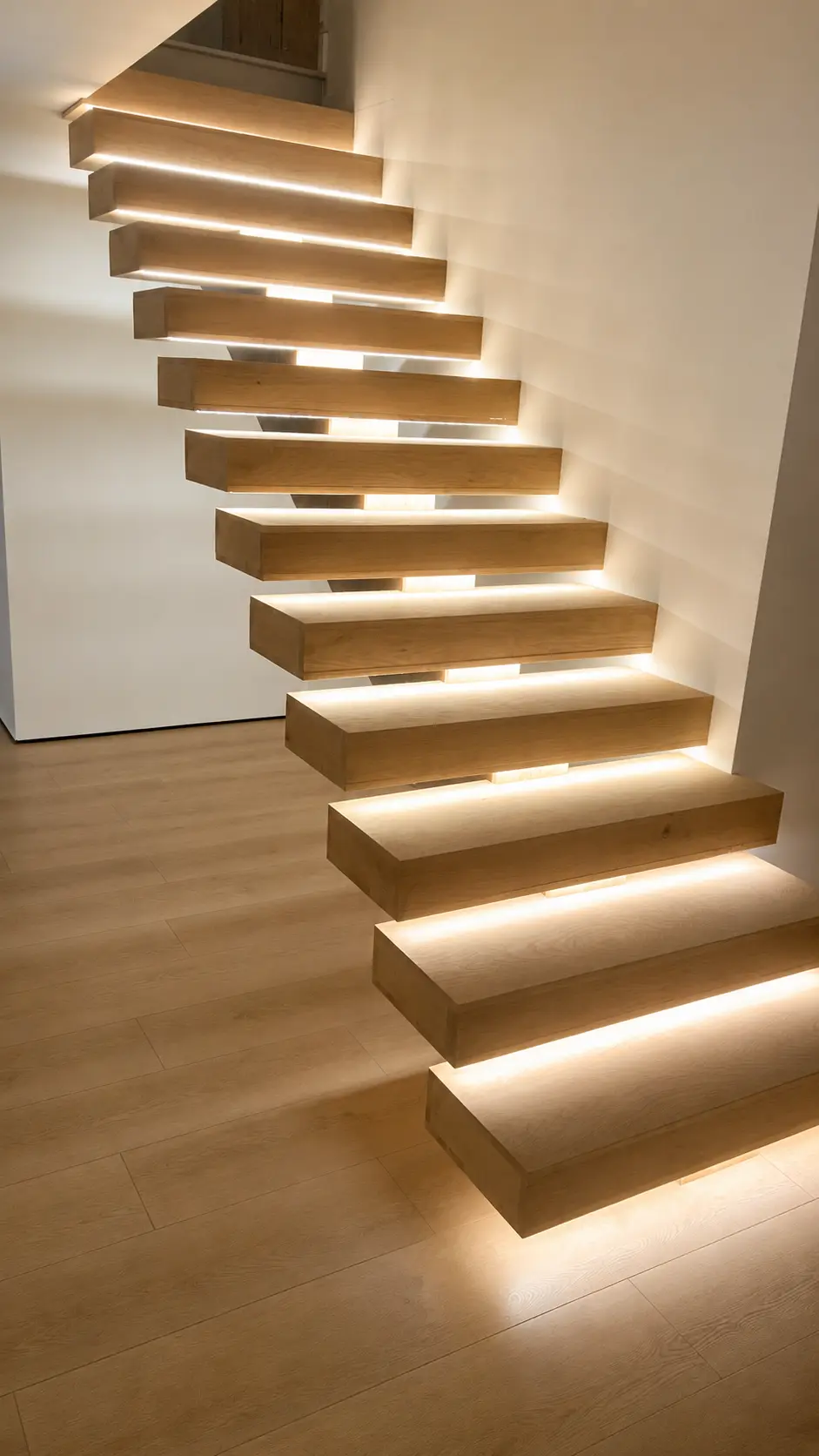
Smart lighting is most valuable when it supports a routine. A bright scene can help with morning preparation. A warm evening scene can make a room more comfortable. Low-level stair or bathroom lighting can guide movement at night without turning on every fixture at full brightness.
Design the layers before the automation
A scene can only control the lighting that was planned into the room. Ceiling lines, shelf lighting, under-cabinet light, perimeter illumination and low-level guidance all serve different purposes. The best results begin with the architecture and the tasks in the space.
Day scenes support visibility
Bathrooms, kitchens, closets and work areas often benefit from brighter, more even light during active hours. Day scenes can coordinate several zones so the room feels complete without requiring the user to operate every circuit separately.
Night scenes reduce glare
At night, the goal is often safe movement with less visual disruption. Lower-output perimeter light, under-step light or selected accent zones can provide a clear path while keeping the space calmer than a full-brightness scene.
Automation should remain understandable
Time schedules, motion sensors, wall controls and app control can work together, but the everyday experience must stay simple. A person should still know how to turn the light on, select a scene and use the room if the network is unavailable.
A documented project example
At a Granada Hills home, NEM Technology coordinated smart LED scenes across a bathroom, walk-in closet and floating staircase using Home Assistant Green. The project included brighter daytime lighting and softer nighttime scenes tailored to each zone.
Planning checklist
Useful lighting-scene ideas
- Morning — bright, even task lighting.
- Evening — warmer and lower-intensity ambient light.
- Night path — low-level guidance in stairs, halls and bathrooms.
- Cleaning — full visibility across all zones.
- Away — selected lighting behavior that matches the property plan.