
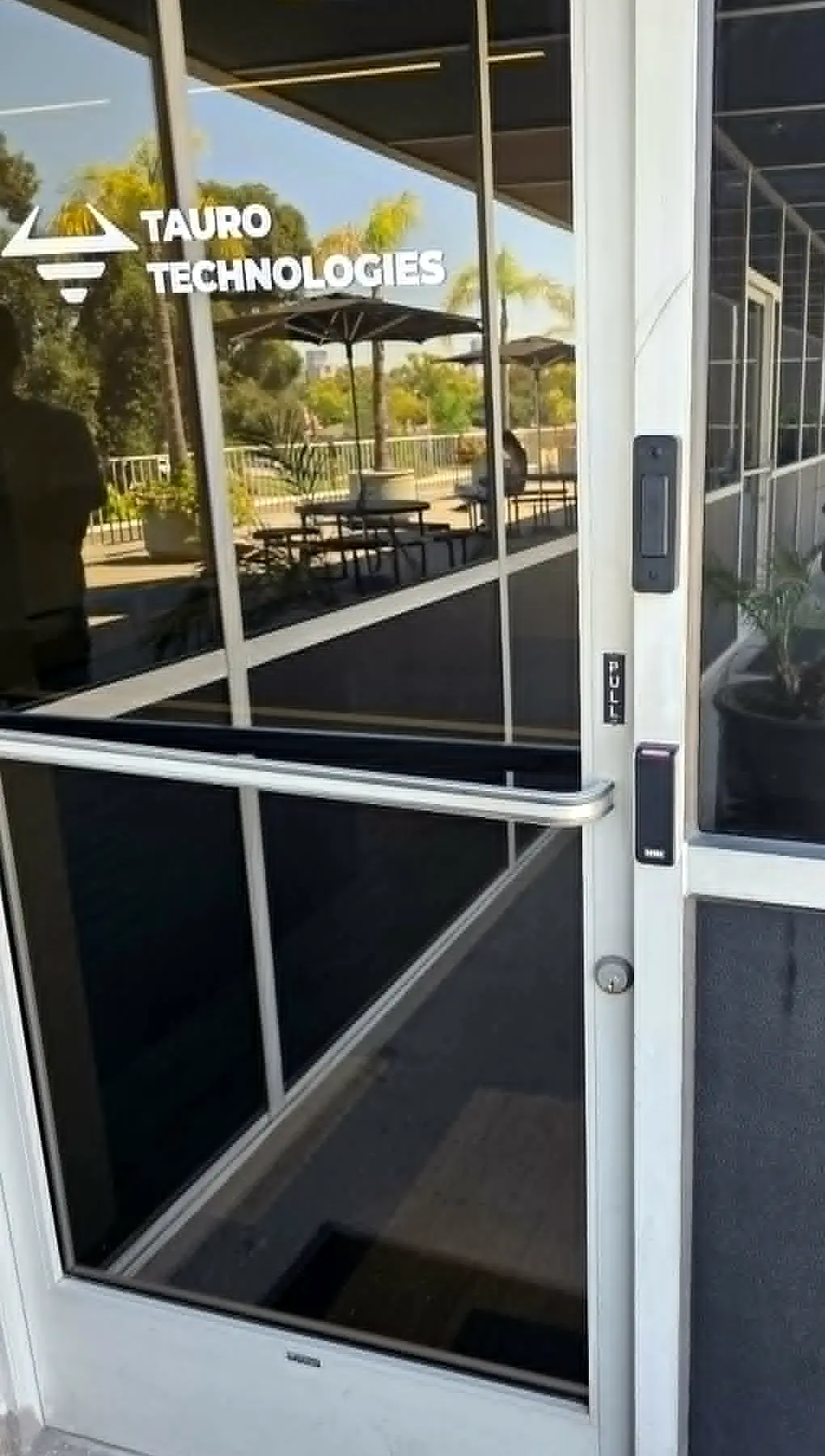
Keys are familiar, but they are not always the simplest way to manage a property. When employees, residents, vendors or visitors need different levels of access, a planned access-control system can make daily entry clearer and easier to manage.
Start with the people and the doors
List who should enter, which doors or gates they should use and when access is allowed. An office entrance, server room, residential gate and service door may each need a different approach. The system should match the property’s real traffic, not force every opening into the same rule.
Keyless access can simplify changes
Credentials can be issued for authorized users without distributing traditional keys. When supported by the selected system, access can also be updated without replacing physical locks throughout the property. This is especially useful when users change over time.
Video intercoms add context
At a secured entrance, an intercom lets someone communicate with a visitor before entry is granted. A video intercom can provide additional context, but its position, lighting, network connection and weather exposure should be considered during planning.
The lock and the low-voltage system must work together
Readers, door hardware, power supplies, request-to-exit devices, gates and network components are connected parts of one entry system. Good installation coordinates those pieces and keeps critical wiring protected and serviceable.
Choose a simple operating experience
Property managers and staff should understand how to add users, remove access, answer visitors and respond when a device is offline. The final handoff is as important as the hardware on the wall.
Planning checklist
Questions to discuss before installation
- Which doors, gates or rooms require controlled entry?
- Who manages users and credentials?
- Do visitors need voice or video communication?
- How should entry work during a power or network interruption?
- Is remote management required and supported by the selected platform?